

Ready, Willing, and Able: Scaling Questions to Find Your Readiness to Change
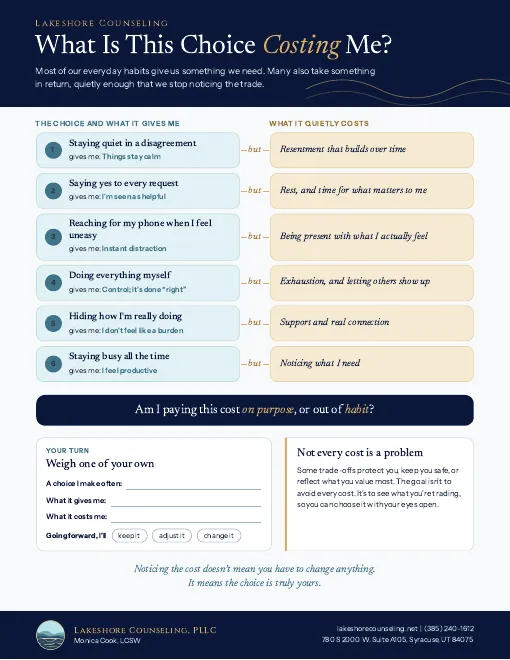
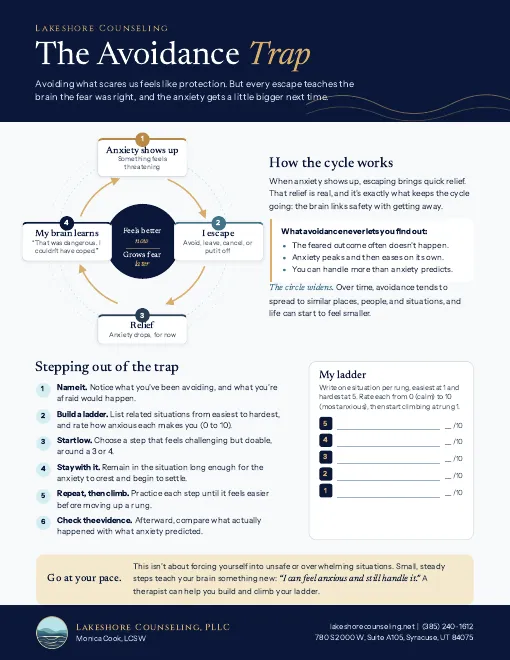
Have you ever wanted to make a change and, at the very same time, not wanted to make it? Maybe you'd like to drink less, but evenings feel empty without it. Maybe you know a hard conversation is overdue, but keeping the peace feels safer. That push and pull has a name: ambivalence. It's not a sign of weakness or a lack of willpower. It's a completely normal part of how people change.
Motivational Interviewing (MI), an approach developed by psychologists William R. Miller and Stephen Rollnick, was designed for exactly this moment. Instead of telling you why you should change, MI helps you hear your own reasons, in your own words. One of its simplest and most useful tools is a set of scaling questions, often called the readiness ruler.
First, where are you right now?
MI is often paired with the Stages of Change, a framework developed by researchers James Prochaska and Carlo DiClemente. It describes readiness not as a yes-or-no switch, but as a series of stages people move through, often more than once.
Knowing your stage matters, because what helps depends on where you are. Someone in contemplation doesn’t need a detailed action plan yet; they need space to sort out their mixed feelings. Scaling questions are a quick way to find out where you are.
The readiness ruler: three scaling questions
Pick one change you’ve been thinking about. Then answer each question on a scale from 0 to 10.
- Importance: “How important is it to you to make this change?” (0 = not at all important, 10 = extremely important)
- Confidence: “If you decided to make this change, how confident are you that you could do it?” (0 = not at all confident, 10 = extremely confident)
- Readiness: “How ready are you to make this change right now?” (0 = not at all ready, 10 = completely ready)
Importance is about the why. Confidence is about the how. Readiness brings the two together, which is why someone can rate a change as a 9 in importance but only a 3 in readiness. That gap is useful information, not a failure.
The follow-up questions are where the magic happens
The number itself is just a starting point. The real value comes from two follow-up questions:
- “Why are you at a ___ and not a higher number?” If you rated importance a 4, ask yourself why it’s a 4 and not a 6 or 7. Your answer shows you what’s holding you back, whether that’s a worry, an obstacle, or a reason the change doesn’t fully fit your life yet.
- “What would it take to move up one or two points?” Not all the way to 10, just a little higher. This points you toward the next realistic step, the support you need, or the obstacle worth solving first.
Be gentle with yourself as you answer. The point isn’t to build a case against yourself; it’s to get honest about what’s in the way, so you know what to work on first.
Try it: move the ruler
What your numbers might be telling you
- Low importance (0–3): You may be in precontemplation, or the change may be someone else’s idea. That’s okay. Instead of forcing it, get curious about your values. What matters most to you, and does this change connect to any of it?
- High importance, low confidence: You care, but you’re not sure you can do it. Focus on confidence: remember past changes you’ve made, break the goal into smaller steps, and line up support.
- Middle numbers (4–6): Classic contemplation. Try writing out what staying the same gives you, what it costs you, and what changing might give you. Seeing both sides on paper often loosens the knot.
- High on all three (7–10): You’re likely in preparation or action. Now is the time for a concrete plan: what, when, where, and who will support you.
A few gentle reminders
Your numbers will change from day to day, and that’s normal. Check in with yourself again in a week. Be kind about where you land; no one moves from 2 to 10 overnight, and every single point counts. And remember that you are the expert on your own life. The best reasons for change are the ones that come from you.
If you’d like help sorting through mixed feelings about a change, therapy can be a good place to do it. You’re welcome to reach out for a free 15-minute consultation.
Sources: Miller, W. R., & Rollnick, S. (2023). Motivational Interviewing: Helping People Change and Grow (4th ed.). Guilford Press. Prochaska, J. O., & DiClemente, C. C. (1983). Stages and processes of self-change of smoking. Journal of Consulting and Clinical Psychology, 51(3), 390–395.